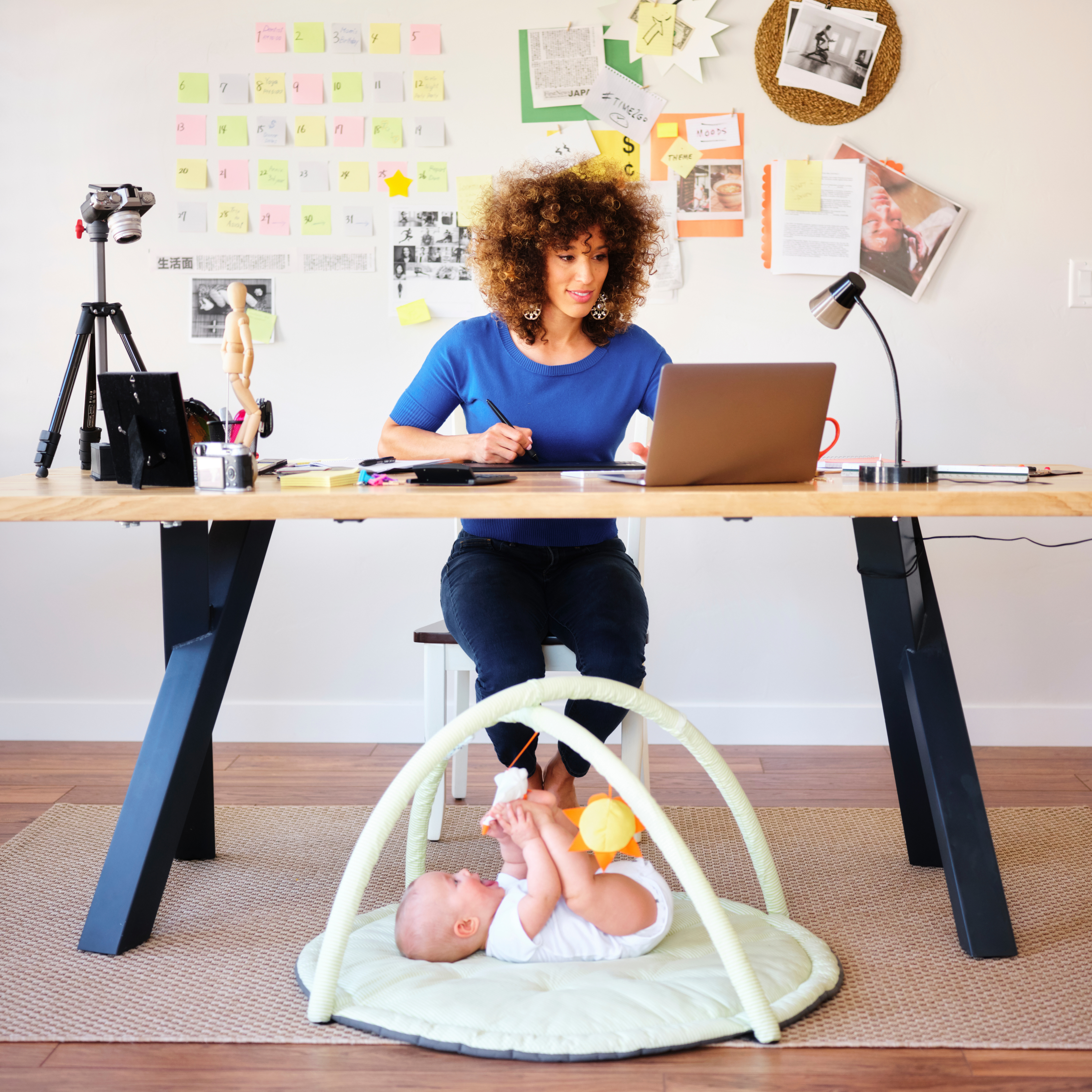
For women in global mobility, the concept of “work-life balance” has always felt slightly out of reach. When your role spans time zones, urgent employee needs, and constant change, balance isn’t realistic. Integration is.
Today’s women leaders—especially those in mobility, HR, and talent—are no longer trying to separate work from life. They’re building careers that fit into their lives, not compete with them. And the data supports this shift.
According to McKinsey & Company, 42% of women report feeling burned out, compared to 35% of men. For women in leadership, that number climbs even higher. In global mobility—where late-night calls, cross-border complexities, and employee care are constant—burnout isn’t a risk. It’s a reality.
What Work-Life Integration Actually Looks Like
Work-life integration isn’t about doing more. It’s about doing what matters—intentionally and sustainably.
For women in global mobility roles, that can look like:
- Taking a call with APAC in the evening—but blocking mid-day time for personal priorities
- Leading a high-visibility project—while protecting energy through structured routines
- Setting clear expectations with stakeholders—without compromising results
It’s not perfect. But it’s sustainable.
The Hidden Load Women Leaders Carry
Women ages 35–55—especially those in leadership—are often navigating peak career growth alongside peak personal responsibility.
Research from Deloitte shows that nearly 60% of women manage the majority of household responsibilities, even while working full-time. This “double shift” is rarely accounted for in leadership expectations, yet it directly impacts energy, performance, and retention.
And organizations are feeling the consequences.
According to Gallup, companies that prioritize flexibility and employee wellbeing see:
- Up to 25% lower turnover
- Higher engagement and productivity
- Stronger employer brand in competitive talent markets
Why This Matters for Global Mobility
Global mobility leaders are uniquely positioned to lead this conversation.
You already design programs around life disruption—relocation, family transitions, cultural change. You understand flexibility in a way most functions don’t.
The next evolution? Applying that same mindset internally.
This means advocating for:
- Flexible work structures that reflect real life
- Family-inclusive mobility policies
- Wellbeing as a core component of assignment success—not an afterthought
The Shift from Surviving to Thriving
Thriving doesn’t come from pushing harder. It comes from working differently.
Redefine productivity. Focus on outcomes, not hours.
Normalize boundaries. Leadership sets the tone—your team is watching.
Build systems. Reduce decision fatigue with structure and support.
Advocate upward. Push for policies that reflect the realities of today’s workforce.
Are you Thriving or Surviving? Take this quick 5-minute Burnout Quiz (attachment)
Join the Conversation: From Burnout to Sustainable Energy
If this resonates, you’re not alone—and you don’t have to navigate it alone either.
We’re bringing this conversation to life in an upcoming session:
From Burnout to Sustainable Energy April 28, 2026
 2:00 PM ET
Designed for high-performing women ready to move from burnout to sustainable energy, this session focuses on practical, actionable strategies you can implement immediately—both personally and within your organization.
 Register here: https://us06web.zoom.us/meeting/register/lCZNkGVcRMmcT9_2ywgS-g
The bottom line: Work-life integration isn’t a trend—it’s a leadership strategy.
And for women in global mobility, thriving starts when we stop trying to balance everything… and start designing careers that work.